Leaky Gut Support

I use this early in every protocol with people who are struggling with unwanted health conditions and especially with those who are dealing with digestive challenges, food sensitivities, histamine, mast cell issues and oxalate intolerances.- Dr. Jockers
Let's discuss the key benefits of Leaky Gut Support:
Why choose Leaky Gut Support?

Why does Dr. Jockers recommend Leaky Gut Support?
Read our customer reviews and you'll see why our clients agree these are...
Supplements You Can
TRUST
Leaky Gut Support
Leaky gut or intestinal permeability syndrome is a condition in which the gut lining is damaged. In this condition, large food particles, bacteria, and environmental toxins are able to seep into the bloodstream and cause problems in the body. In a healthy body, your gut lining is healthy, and it is naturally semi-permeable. This means that your gut lining allows important micronutrients to pass through tiny junctions or holes into your bloodstream.
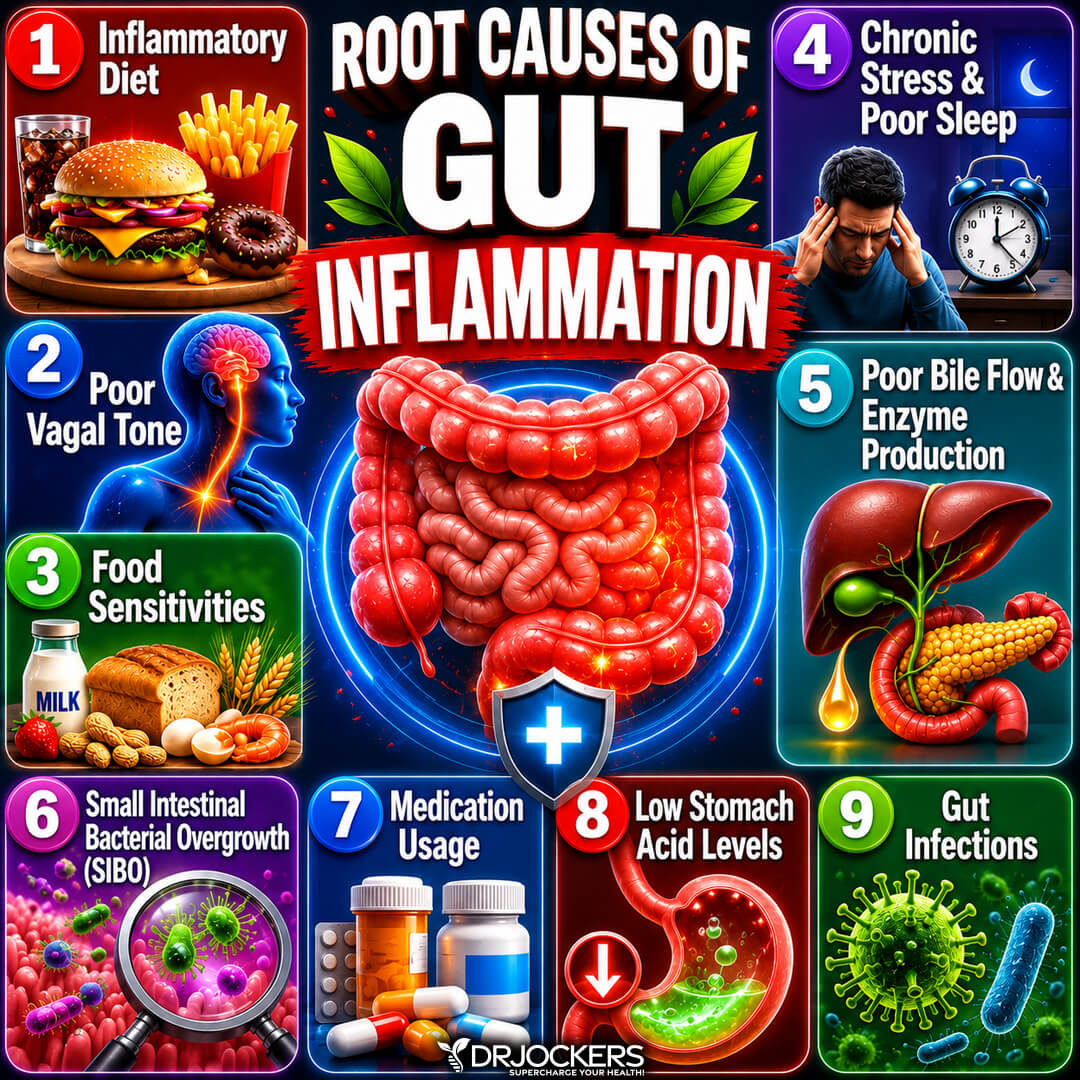
We are talking about very small gateways that don’t allow microbes, toxins, and undigested food particles to get through to your bloodstream to keep your body healthy. These pathogens and harmful substances will be eliminated through urine and stool instead. However, inflammatory foods, environmental toxins, chronic stress, gut dysbiosis, infections, and other factors may compromise your gut lining.

Leaky Gut And Chronic Inflammation
Over time, these factors can seriously damage your gut lining and break apart these tiny passageways, creating bigger holes. When bigger holes develop, your gut lining becomes permeable, and you develop leaky gut syndrome or intestinal permeability. This means that microbes, toxins, undigested large food particles, and other pathogens can easily pass into your bloodstream and cause serious damage to your body.
Leaky gut syndrome can increase chronic inflammation, compromise your immune system, and cause chronic health issues. It may result in an ongoing chronic immune response to these foreign substances, which increases the risk of chronic symptoms, autoimmunity, and other health problems.
Reduced Mitochondrial Function And Gut Dysbiosis
Reduced mitochondrial function and gut dysbiosis are also connected. The mitochondria play a vital role in maintaining cellular energy, regulating immune responses, and allowing healthy functioning. If the mitochondria are impaired, it will impact the health and function of the cell. If these cells are located in the gut lining, they can compromise the integrity and health of the intestinal barrier, contribute to gut dysbiosis, and impact digestive function.
In gut dysbiosis, we see an overgrowth of pathogenic aerobic bacteria. In a normal gut flora, the gut microbiome is dominated by anaerobic bacteria. Anaerobic bacteria thrive in a low-oxygen environment of the healthy colon. Aerobic bacteria can produce histamine and other inflammatory compounds. This may lead to an excessive immune response and increase pro-inflammatory cytokine levels.
Thus, people with poor mitochondrial function and related gut dysbiosis may experience poor regulation of the immune and inflammatory response and can experience chronic inflammation and immune system-related issues, such as autoimmunity.
Again, this can turn into a vicious cycle. Gut dysbiosis can increase bacterial overgrowth. Bacterial overgrowth can increase mitochondrial dysfunction and chronic inflammation. This will further increase leaky gut syndrome, immune dysregulation, and autoimmunity, which will then only further contribute to gut dysbiosis. Thus, again, it’s critical that during treatment we focus both on mitochondrial function and gut health.

Key Nutrients To Support Gut Healing:
The gut needs 3 key compounds in order to heal itself and regulate the gut microbiome. The goal of these 3 compounds is to strengthen the intestinal cell mitochondria and make the intestinal cells stronger and more resilient.
Prebiotics: These are compounds that feed and nourish healthy gut bacteria.
Probiotics: These are beneficial bacteria that eat toxins and secrete nutrients to support the gut lining.
Postbiotics: These are compounds released from healthy probiotic bacteria that enhance the function and integrity of the intestinal cell mitochondria. The most well studied postbiotic is a short chain fatty acid called butyric acid, which acts like mitochondrial medicine in restoring mitochondrial function, especially in the intestinal lining.
The Problem With Most Prebiotics:
The problem is that many types of prebiotics, such as various fibers and polysaccharides from plant-based foods, actually cause more problems for a number of individuals if they have the wrong intestinal ecosystem. This is because the aerobic, pathogenic microbes will flourish with these fibers and release more toxins and inflammatory compounds.
We need prebiotics that do a few things
-
Provide beneficial nutritional support to healthy gut microbes
-
Bind and help remove toxins and bad microbes
-
Restore key minerals and nutrients for the intestinal cells
Based on these 3 things, the only truly beneficial prebiotic for someone struggling with leaky gut is a unique compound called Shilajit due to its high bioactive fulvic and humic acid and mineral content.
Shilajit is a blackish-brown, resinous substance found in the high altitudes of the Himalayas and other mountain ranges. It is a traditional Ayurvedic medicine that has been used for centuries.
-
Supports Beneficial Bacteria: Shilajit contains bioactive compounds, notably fulvic and humic acids, that may encourage the proliferation of beneficial gut flora while simultaneously helping to inhibit the growth of harmful bacteria. This helps maintain a balanced and diverse gut environment, which is crucial for optimal digestion and immune function.
-
Enhancing Nutrient Absorption: Fulvic acid's properties include enhancing the transport and absorption of minerals and other vital nutrients into the cells. Improving the efficiency of nutrient uptake from food, it supports overall digestive health.
-
Soothing the Gut: Shilajit exhibits anti-inflammatory properties that may help soothe the digestive tract and reduce gut inflammation.
-
Detoxification: Its humic substances may help cleanse the digestive system by binding to and flushing out toxins and heavy metals, creating a healthier environment for beneficial bacteria to thrive.
-
Improving Digestive Enzyme Production: Shilajit may support the body's production of digestive enzymes, which are essential for breaking down food effectively.
The Problem With Most Probiotics:
The problem with most probiotic supplements is that they don’t survive the harsh environment of stomach acid, many don’t actually produce much butyric acid and other beneficial postbiotic compounds, and others may actually cause more traffic and stress in the gut.
We also need probiotics that do the following:
-
Spore forming to survive the harsh stomach acid and make it into the intestines alive
-
Produce abundant amounts of mitochondrial medicine in the form of butyric acid and other beneficial postbiotic compounds.
-
Release a variety of antimicrobial compounds that inhibit and trim down the amount of aerobic bacteria in the gut.
The only classification of probiotics that fit these standards is the spore forming bacillus strains of bacteria. We recommend the most well studied bacillus strains, bacillus coagulans and bacillus subtilis.
The combination of these 2 have been shown to be very effective for improving digestive and immune health. They have been shown to help heal the gut barrier and support the production of sIgA and T-lymphocytes in the gut, which are critical to a healthy immune and inflammatory response.
The best dosage is roughly 4-8 billion CFU daily of Bacillus coagulans and 2-4 billion CFU of Bacillus subtilis daily.
The Problem With Most Postbiotics:
There aren’t a lot of postbiotic supplements on the market, but the most well studied postbiotic is butyric acid (or butyrate), which has been shown to
-
Strengthen the Intestinal Cell Mitochondria
-
Seals the Intestinal Lining
-
Improves the Gut Mucosa and Immune Function
-
Supports the Diversity of the Gut Microbiome
-
Improves Inflammatory Processes
-
Reduces Histamine and Mast Cell Activation
The most commonly used butyric acid compound on the market is sodium butyrate. This product is good, but it is water soluble, and thus, it releases the salt component (sodium) from the butyrate in the proximal portion of the small intestine. This means that the main benefit is taken in the front part of the small intestine, and it doesn’t make it deeper into the small intestine or impact the large intestine.
CoreBiome is a lipid soluble form of butyric acid, which means it contains butyrate in a fat-soluble form. This lipid-based structure allows it to bypass the stomach and small intestine more effectively than other butyrate supplements, delivering the beneficial postbiotic butyrate directly to the colon, where it is most needed.
It helps support gut barrier integrity, promotes a healthy inflammatory response, and supports a balanced gut microbiome.
What Is Leaky Gut Support?
Leaky Gut Support was made from over 20 years of research into intestinal permeability and leaky gut syndrome. It contains the most effective forms of prebiotics, probiotics, and postbiotics in clinically validated dosages.
We combined the power of Shilajit with Bacillus strains of spore forming probiotics and CoreBiome postbiotics.

This is the most powerful supplement to support the intestinal cell mitochondria, balance the gut microbiome, and create a stronger and more stress resilient intestinal lining.
*This product contains 4 billion CFU of Bacillus coagulans and 2 billion CFU of Bacillus subtilis per serving.
What Is the Recommended Dosage?
Recommended Dosage: Take 1 capsule, 2 times daily with or without food
Advanced Dosage: Take 2 capsules, 2 times daily with or without food.
When introducing a new supplement, we recommend taking the lowest dose for 2-3 days. As tolerated, increase the dose until you have reached the recommended normal or advanced guidelines. Reduce to a tolerable dosage if adverse effects occur.
† These statements have not been evaluated by the Food and Drug Administration.
This product is not intended to diagnose, treat, cure or prevent any disease.